Practical meals · Flexible portions · Simple preparation
High Protein Breakfast for Weight Loss: 10 Practical Ideas
Planning a high protein breakfast for weight loss does not require special powders or a strict morning timetable. Start with familiar protein foods and a meal you can prepare consistently.
These ten ideas include dairy, eggs and plant-based options. They are meal examples—not prescriptions or promises that breakfast will cause weight loss.
Article contents
Breakfast is one part of your eating pattern

Do not assume that adding breakfast automatically produces weight loss, or that skipping it automatically causes weight gain. A 2019 review of randomised trials did not support those general claims. It also noted limitations in the available evidence.
Your overall food and drink intake, health and routine matter. The NIDDK recommends an eating pattern you can maintain over time, including a variety of food groups.
There is no need to describe ordinary foods as “bad carbs.” If you want individual weight-management advice, a qualified professional can help you choose an approach that fits.
For broader planning, read our beginner habit guide .
Build a high protein breakfast for weight loss around familiar foods
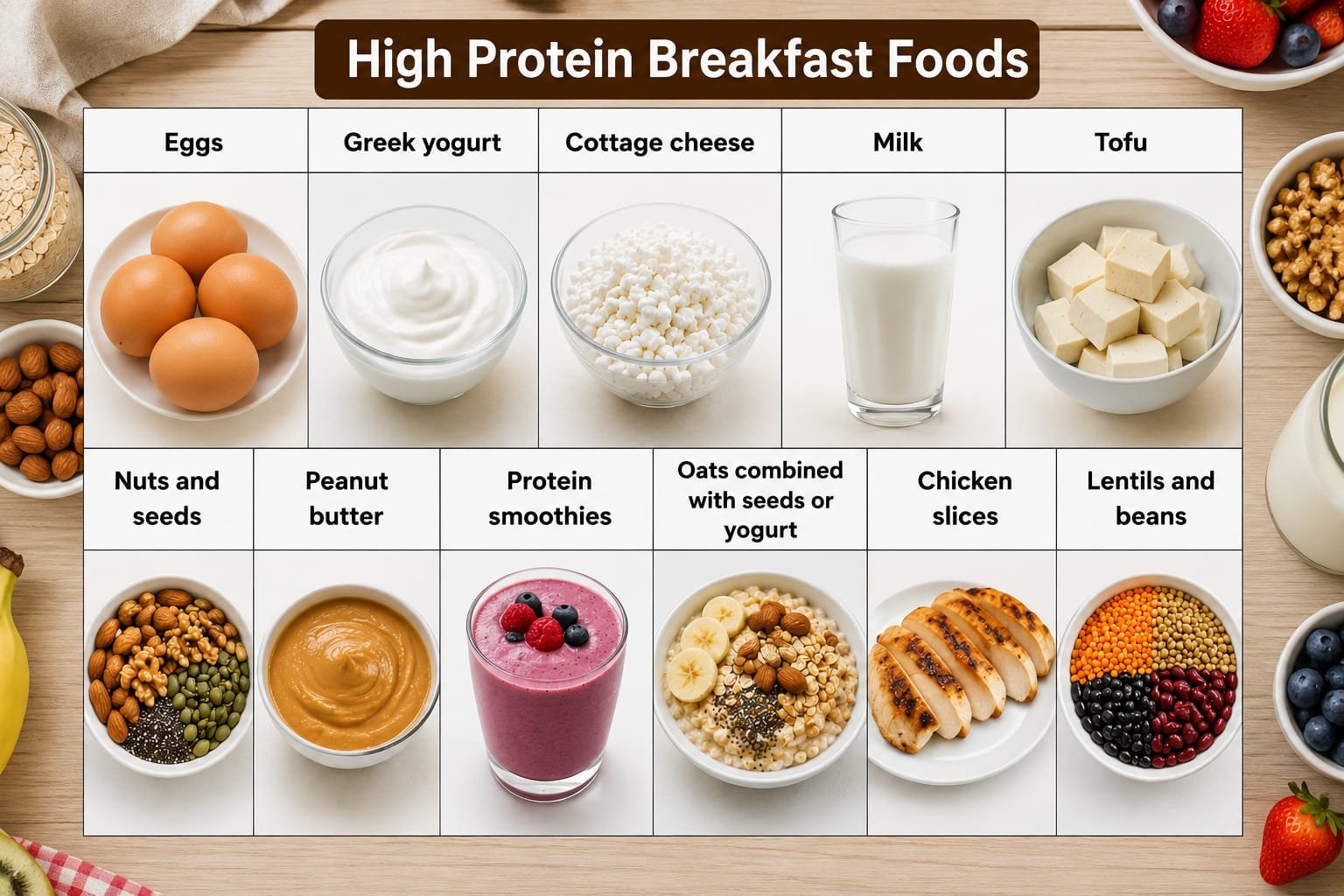
Choose a protein food, then add other ingredients to make a meal that suits your appetite and preferences. Eggs, yogurt, cottage cheese, tofu, beans and lentils provide different ways to organise breakfast.
The examples below include a protein food, but they do not all contain the same amount. No grams of protein have been calculated for these recipes.
Check the label per serving. “Greek-style,” plant-based and dairy-free products can differ substantially, so their names alone do not establish equivalent nutrition.
Add fruit, vegetables or a grain you enjoy. Nuts, seeds and oils can also fit, but adding them does not make a meal calorie-free or guarantee weight loss.
10 breakfast ideas with protein foods
These quantities are preparation examples, not prescribed servings. Adjust them for your needs, avoid allergens and follow safe cooking and storage instructions.
1. Eggs with toast and vegetables
Example ingredients: two eggs, toast, tomato and cucumber.
Preparation: cook the eggs until the whites and yolks are firm, toast the bread and serve with washed vegetables.
Make it practical: prepare the vegetables while the eggs cook. Use bread you enjoy rather than buying a specialist diet product.
2. Greek yogurt with fruit
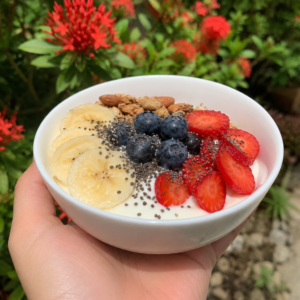
Example ingredients: plain Greek yogurt, berries and a small spoonful of seeds, if tolerated.
Preparation: place yogurt in a bowl and add washed fruit. Add seeds or nuts only if suitable.
Make it practical: compare yogurt labels for protein, serving size and added sugar rather than relying on packaging claims.
3. Oats with milk and yogurt
Example ingredients: oats, milk or a suitable alternative, plain yogurt and chopped fruit.
Preparation: cook the oats following package instructions. Let them cool to a comfortable temperature before adding yogurt and fruit.
Make it practical: check the protein content of the milk alternative you choose. Alternatives are not automatically equivalent.
4. Yogurt, banana and oat smoothie
Example ingredients: plain yogurt, half a banana, two tablespoons of oats and enough milk or water to blend.
Preparation: blend in a clean blender and serve promptly. Adjust ingredients for allergies and your breakfast needs.
Make it practical: treat this as food, not an extra fat-burning drink. See our morning drinks guide for the distinction between drinks and smoothie meals.
5. Vegetable omelet
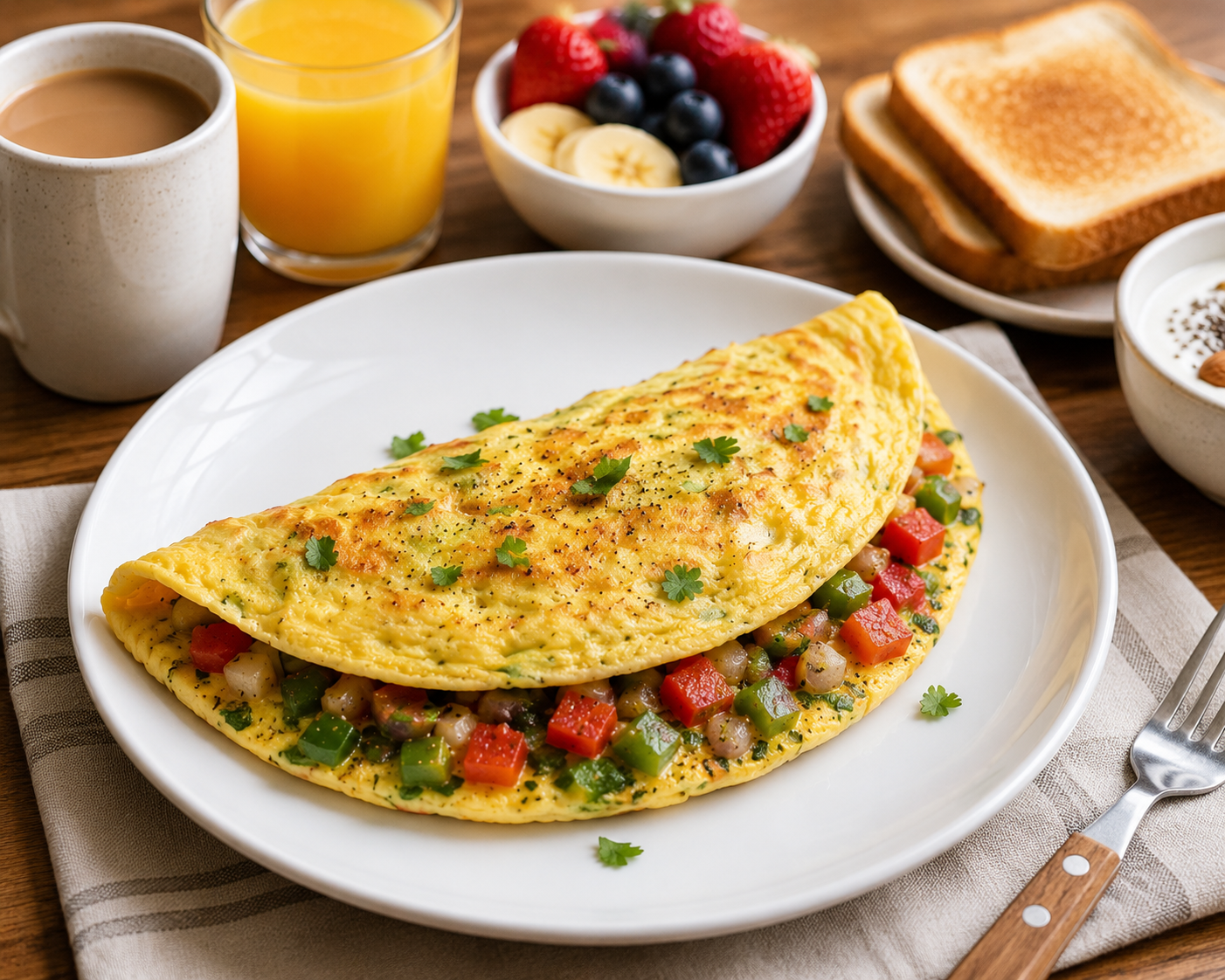
Example ingredients: eggs, chopped mushrooms, spinach or tomato, and a little cooking oil.
Preparation: cook the vegetables, add beaten eggs and cook until the egg mixture is set. Add bread or another accompaniment as needed.
Make it practical: use vegetables already available rather than buying several ingredients for one breakfast.
6. Cottage cheese and fruit bowl
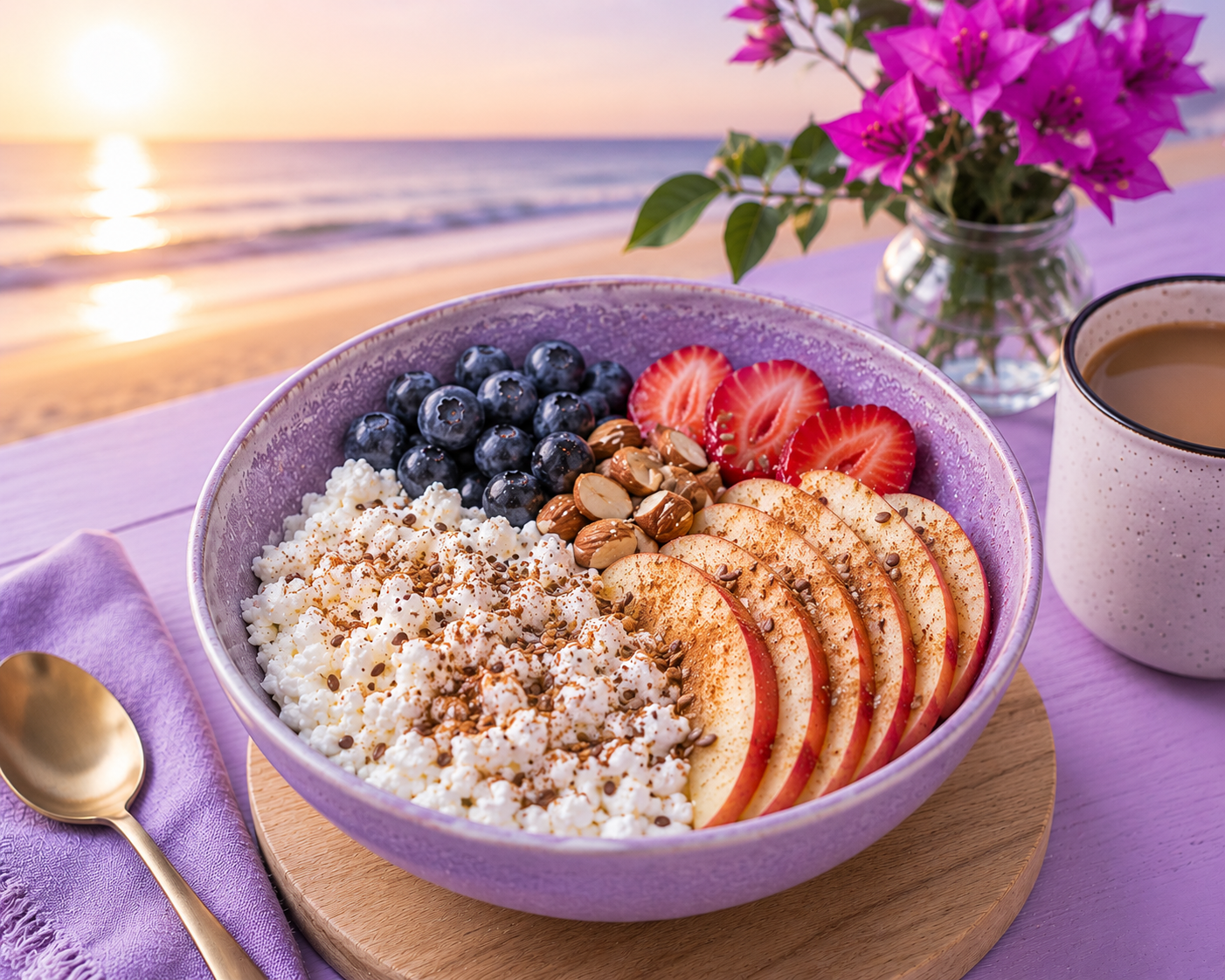
Example ingredients: cottage cheese, sliced apple or berries, and cinnamon if desired.
Preparation: combine in a bowl. Add oats or toast if that better meets your meal needs.
Make it practical: keep it refrigerated until serving and check the label for the portion you actually use.
7. Peanut butter toast with yogurt
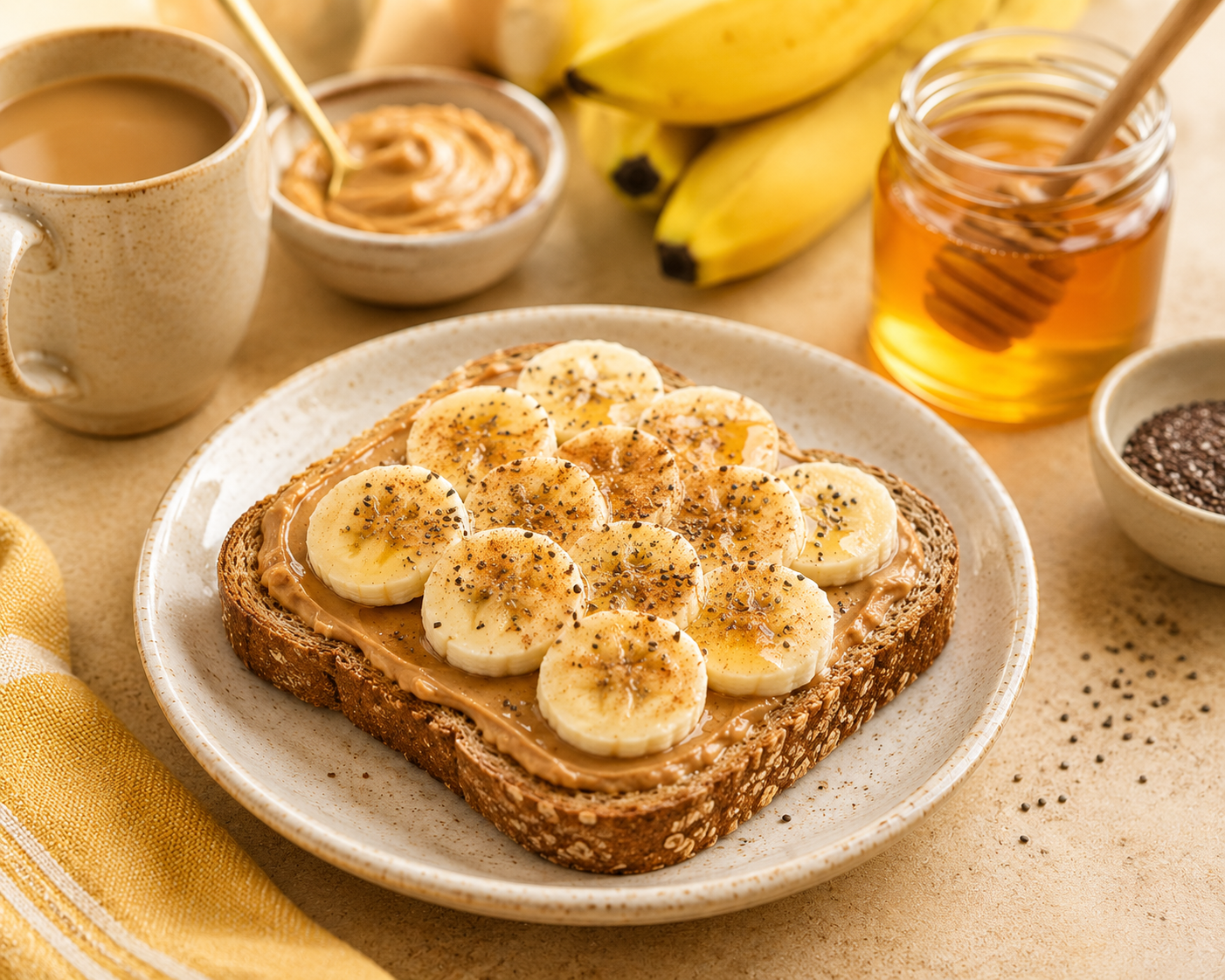
Example ingredients: toast, peanut butter, banana and a side of plain yogurt.
Preparation: spread peanut butter on toast, add banana and serve with yogurt. Avoid peanuts if allergic.
Make it practical: the yogurt adds another protein food. Peanut butter toast alone may not match the protein content of other meals here.
8. Tofu scramble with toast
Example ingredients: firm tofu, chopped vegetables, toast and your preferred seasoning.
Preparation: crumble the tofu into a pan with cooked vegetables and heat thoroughly. Season and serve with toast.
Make it practical: a dairy-free and egg-free option, provided the chosen ingredients meet your dietary needs.
9. Beans with toast and tomato
Example ingredients: cooked beans, toast and washed tomato.
Preparation: heat beans following the product instructions and serve with toast. Check sauce ingredients if using canned baked beans.
Make it practical: keep a suitable canned option available for a low-preparation morning.
10. Lentils with chapati or rice
Example ingredients: cooked lentils, chapati or rice, and vegetables.
Preparation: prepare fresh or safely reheat correctly stored ingredients according to food-safety guidance.
Make it practical: breakfast does not have to look like a conventional cereal-and-toast meal. Familiar dishes can be useful too.
Make your breakfast routine easier
Choose two regular options
Keep one quick bowl and one cooked meal available. Repetition can reduce shopping and preparation effort.
Plan a backup
Keep a suitable shelf-stable ingredient, such as oats or canned beans, for a disrupted morning.
Check your drink
Note the size and extras in coffee, juice or other drinks. Consider the whole breakfast, not just the food on the plate.
Adapt to your schedule
You do not need a universal 7–9 AM timetable. Follow any individual meal-timing advice you receive.
Shop for ingredients that overlap. Yogurt can work in a bowl, oats or a smoothie; vegetables can accompany eggs, tofu or beans. Store foods safely rather than preparing a week of perishable meals without checking their storage requirements.
Avoid adding supplements simply because a meal is called “high protein.” For an example of how to assess supplement claims, read our spirulina evidence and safety guide .
High protein breakfast for weight loss: common questions
How much protein should breakfast contain?
This article does not set a universal target. Your needs and any medical restrictions matter. Check labels and seek individual advice when needed.
Will these breakfasts remove belly fat?
No meal in this guide is presented as a targeted belly-fat treatment. The recipes cannot predict an individual weight-loss result.
Do I have to eat breakfast to lose weight?
The cited research does not establish that adding breakfast automatically produces weight loss. Choose a routine suited to your needs and health.
Do I need protein powder?
None of these ten ideas requires it. Ordinary foods provide ways to include protein without a supplement.
Are all ten recipes equally high in protein?
No. Portions and products differ, and the recipes have not been nutritionally analysed. Use the actual ingredient labels rather than assuming identical values.
Sources and writing approach
- NIDDK: Eating and physical activity for weight management
- BMJ: Breakfast, weight and energy intake—systematic review
These sources have not reviewed or endorsed the recipes. The meal ideas are editorial examples, not clinically tested weight-loss meals or calculated nutrition plans.
I own this blog and check health information using medical websites. This article has not been personally reviewed by a medical professional. Learn more on the About page and read our Disclaimer.