 FAST SLIM JOURNEYYour everyday wellness journal
THE EVENING EDIT / REST & EVERYDAY WELLNESS
Bedtime Routine for Better Sleep:
7 Easy Habits
Let the day end a little more gently.
A bedtime routine for better sleep can be simple: keep a steady wake-up time, make evenings quieter and choose a few habits you can repeat. You do not need a perfect bedroom, expensive products or an elaborate list of rules.
Start with one dependable wake-up time and one calming evening habit. Add other changes gradually. Sleep routines can support rest, but persistent sleep problems may need professional care.
A ROUTINE THAT FITS REAL LIFE
What makes a bedtime routine useful?
You finally put your phone down, turn off the light and remember three things you meant to do tomorrow. The bedroom is quiet, but your day still feels unfinished. An evening routine creates a transition between being available to everyone else and allowing yourself to rest.
That transition does not need to look impressive. Putting tomorrow’s bag by the door, lowering a bright lamp and reading a few pages can be more practical than a ten-step ritual you abandon after two nights. The best routine is one that fits your responsibilities, budget and living space.
The CDC’s overview of sleep highlights regular schedules, a restful environment and less screen use before bed. Adults aged 18–60 generally need at least seven hours; needs vary with age and circumstances. Leave enough time for sleep rather than trying to fit it around everything else.
BUILD YOUR EVENING, ONE HABIT AT A TIME
7 habits for a bedtime routine for better sleep
Give your morning a dependable starting point
A bedtime routine for better sleep begins partly with what happens the next morning. Choose a wake-up time that usually works for your life, including days off where possible. An unpredictable morning can make the evening harder to plan.
Work backwards from that time to leave an adequate sleep opportunity. Avoid treating an earlier bedtime as an instruction to lie awake for hours. If you work rotating shifts or care for someone overnight, a standard evening schedule may not fit; ask for guidance that matches those demands.
Move caffeine out of your late-day routine
Check when your last coffee, caffeinated tea or energy drink usually happens. The NHLBI explains that caffeine’s effects can last up to eight hours. Sensitivity and drink strength differ, so a small late-afternoon cup can still matter to some people.
For an intended 11 p.m. bedtime, eight hours earlier is 3 p.m. This is a planning example, not a universal deadline. Try an earlier cutoff and notice your response. If you regularly consume a lot of caffeine, reducing gradually may be more comfortable than stopping abruptly.
Make the last part of the evening quieter
Choose a realistic point to stop nonessential work, household admin and stimulating scrolling. You could begin with a ten-minute buffer rather than promising a completely screen-free evening. The aim is to create a boundary you can actually keep.
Park the phone somewhere reachable if necessary, but less tempting. Silence nonessential alerts and preserve emergency contacts. A screen filter does not remove the pull of messages, shopping or an unfinished argument. What you do on the device matters as well as its brightness.

Make your bedroom comfortable, not showroom-perfect
Think dark, quiet and comfortably cool, rather than copying an expensive hotel. Adjust bedding, reduce avoidable light and deal with a noisy notification before buying anything new. An eye mask or earplugs may help when suitable for your circumstances.
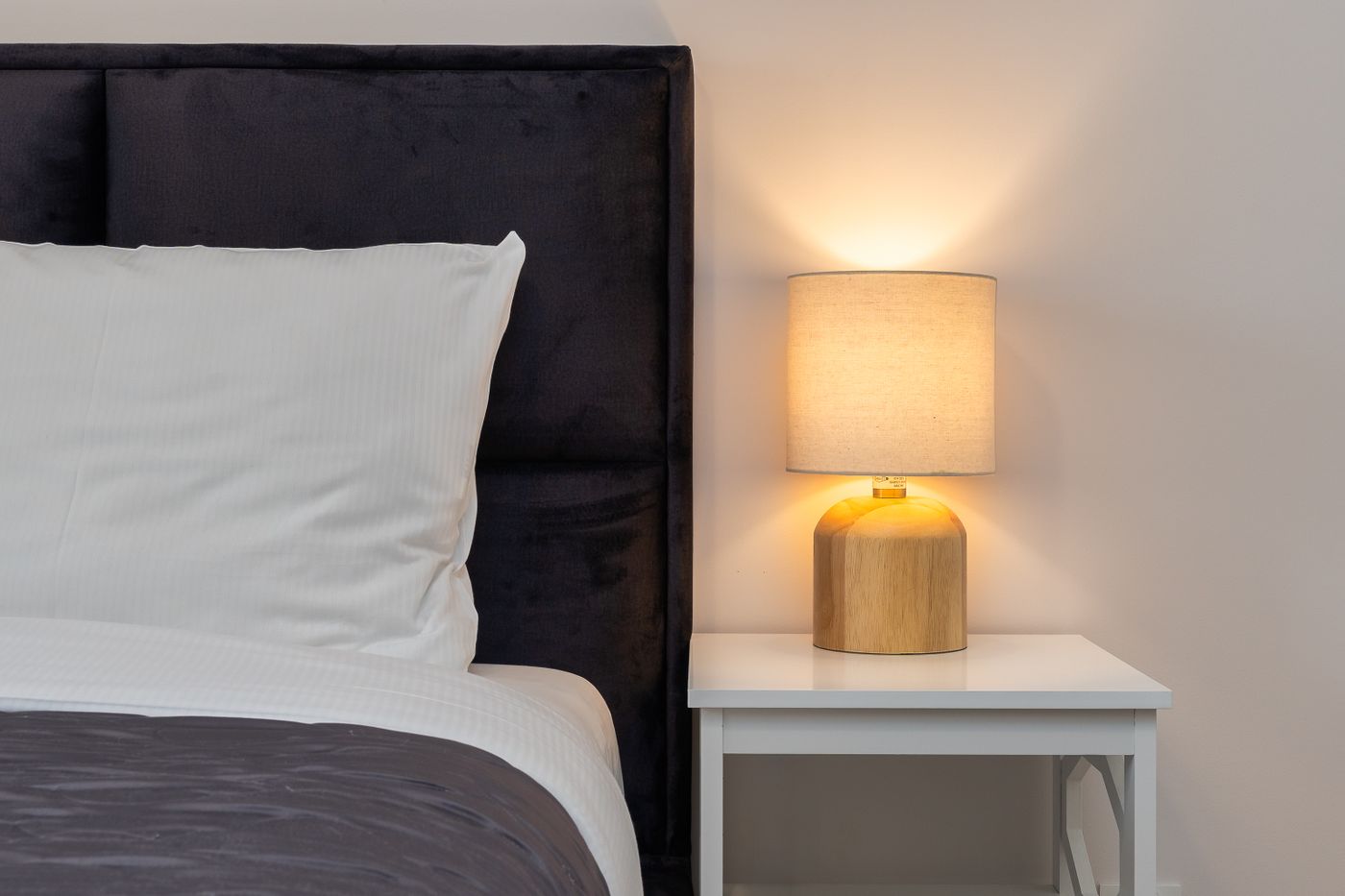
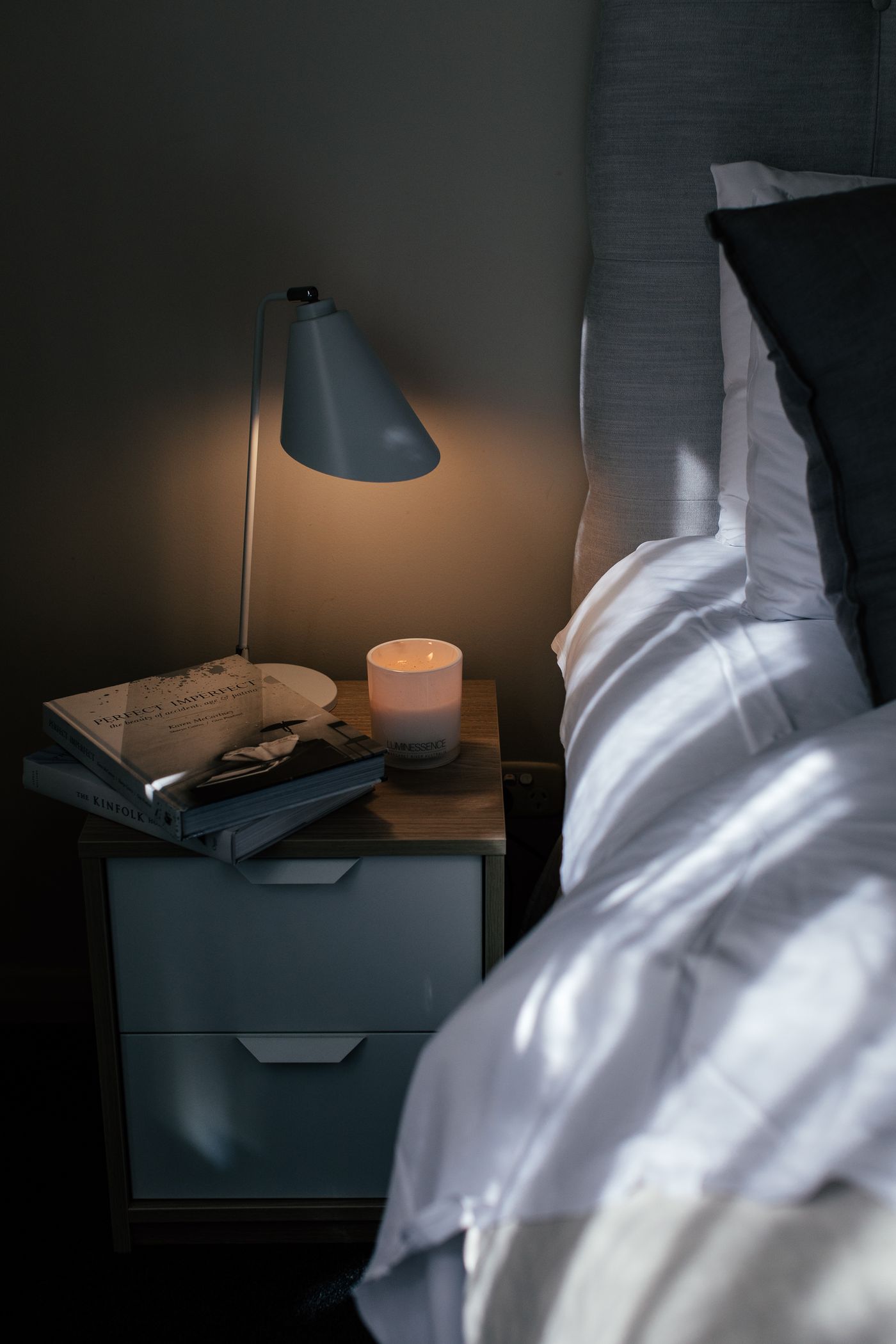
Keep enough light to move safely if you get up. In a shared room, agree on one achievable change instead of trying to control every sound. The photographs in this guide are visual inspiration; a beautiful room is not a requirement for good sleep.
Pick one low-effort way to unwind
Read a familiar book, listen to something calm or spend a few minutes on an unhurried task away from work. Choose an activity you like rather than one that feels like another achievement to measure. You do not have to meditate successfully or empty your mind.
If tomorrow’s tasks keep interrupting, try a short paper note: one thing to remember and the next practical action. Close the notebook afterwards. This is an organisational suggestion, not a treatment for anxiety or a guarantee that thoughts will disappear.
Keep food and drink decisions comfortable
A large meal close to bedtime can feel uncomfortable. Plan dinner at a time that suits you, and avoid using alcohol as a sleep aid. The NHLBI’s insomnia guidance notes that alcohol may make sleep lighter and more interrupted, even when it initially makes you drowsy.
You do not need a strict rule that bans food after a particular hour. If hungry, consider an ordinary small snack that suits your needs. For practical options, see our snack and portion guide. Do not use a calorie target from a general article as individual medical advice.
Let sleepy—not a perfect checklist—guide bedtime
Once the evening is quieter, notice whether you feel sleepy. Going to bed because a tracker says you should can add pressure if you are still fully alert. Try not to keep checking the time or grading the quality of your wind-down.
If you are lying awake and becoming frustrated, the NHS sleep advice suggests a quiet activity in a comfortable place and returning when sleepier. Move safely, particularly if balance or mobility is an issue. A clinician can adapt this advice when needed.
LESS PLANNING. MORE BREATHING ROOM.
A flexible 30-minute evening timeline
This is an example sequence, not a scientifically tested programme or a promise to fall asleep in 30 minutes. Start it before your intended bedtime and adapt the timing.
- First 10 minutesFinish one essential task. Put tomorrow’s basics together and stop adding new jobs.
- Next 10 minutesWash, change and adjust the room. Put the phone in its chosen spot.
- Final 10 minutesRead or choose another quiet activity. Head to bed when sleepy.
Only have five minutes? Choose a smaller version: prepare one thing for tomorrow, silence nonessential alerts and settle into a quiet activity. Consistency does not require identical evenings.
Your bedtime routine checklist
Use these as gentle prompts, not a scorecard. The tick boxes work on this page, but they do not save your answers or send personal information.
What about the rest of your day?
A bedtime routine for better sleep is only one part of the picture. Daytime movement and a workable daily schedule also deserve attention. If you are building an activity habit, our beginner walking guide offers a flexible starting point. You do not need a demanding late workout to earn rest.
Preparing breakfast can also remove one small morning decision. Our apple cinnamon overnight oats are a make-ahead food idea, not a sleep remedy. Use meal preparation only if it genuinely makes your day easier.
WHEN A ROUTINE IS NOT ENOUGH
Get help when sleep problems keep happening
If sleep difficulties persist, affect daily life or leave you struggling to cope, speak with a healthcare professional. Mention loud snoring, gasping or pauses in breathing, and significant daytime sleepiness. Do not drive when sleepy.
A routine cannot diagnose or treat every cause of poor sleep. The NHS insomnia guide explains when to seek help and discusses cognitive behavioural therapy. Avoid adding sleeping tablets, melatonin or herbal products just because they appear in a trending night routine; ask about suitability and interactions first.
A FEW COMMON QUESTIONS
Bedtime routine for better sleep: FAQs
How long should my bedtime routine take?
There is no required duration. Choose enough time for a calm transition that fits your responsibilities. The 30-minute example above is an organisational idea, not a sleep prescription.
What if I need my phone nearby?
Keep it available for essential calls or care responsibilities. Reduce optional alerts and avoid activities that keep drawing you back. An achievable boundary is more useful than an unrealistic ban.
Will this help me lose weight?
This is a sleep-habit guide, not a weight-loss method. Sleep belongs within overall wellbeing, but these steps do not promise changes in body weight, appetite or hormones.
What if I work nights or have an unpredictable schedule?
Adapt the sequence to your main sleep period rather than a fixed evening clock time. Rotating shifts, caregiving and medical needs may require individual support. Do not assume a conventional bedtime works for everyone.
How quickly will I notice a difference?
No fixed result or deadline can be promised. Notice which changes make evenings easier, and seek advice if difficulties continue. You do not need to wait for a self-imposed challenge to end before asking for help.
Sources, photographs and editorial notes
This guide uses the CDC, NHLBI and NHS resources linked in the text. The evening timeline and checklist are practical editorial examples, not a clinically tested programme. General adult information; not an individual diagnosis or treatment plan. No personal sleep results or medical review are claimed.
Photographs are real licensed stock images, not photographs of a tested routine: bedroom lamp, quiet reading and bedside books. Used under the Pexels licence. People and properties pictured do not endorse this guide.
Learn about Fast Slim Journey, read our disclaimer or send a correction.
LEAVE SOME SPACE AT THE END OF THE DAY.
A gentler evening.
A routine you can return to.