
Psyllium Husk for Weight Loss: Evidence and Safe Use
Psyllium husk for weight loss is often promoted as a simple daily habit, but it is not a fat-burning drink. Also called isabgol or ispaghula, psyllium is a fibre supplement and bulk-forming laxative. Research on weight changes is mixed, and taking it does not guarantee that you will lose weight.
This guide separates the evidence from the marketing and explains what to check before using a product. The most important question is not whether to take it before breakfast or dinner. It is whether psyllium is suitable for you, how your particular product must be prepared, and whether it affects your medicines.
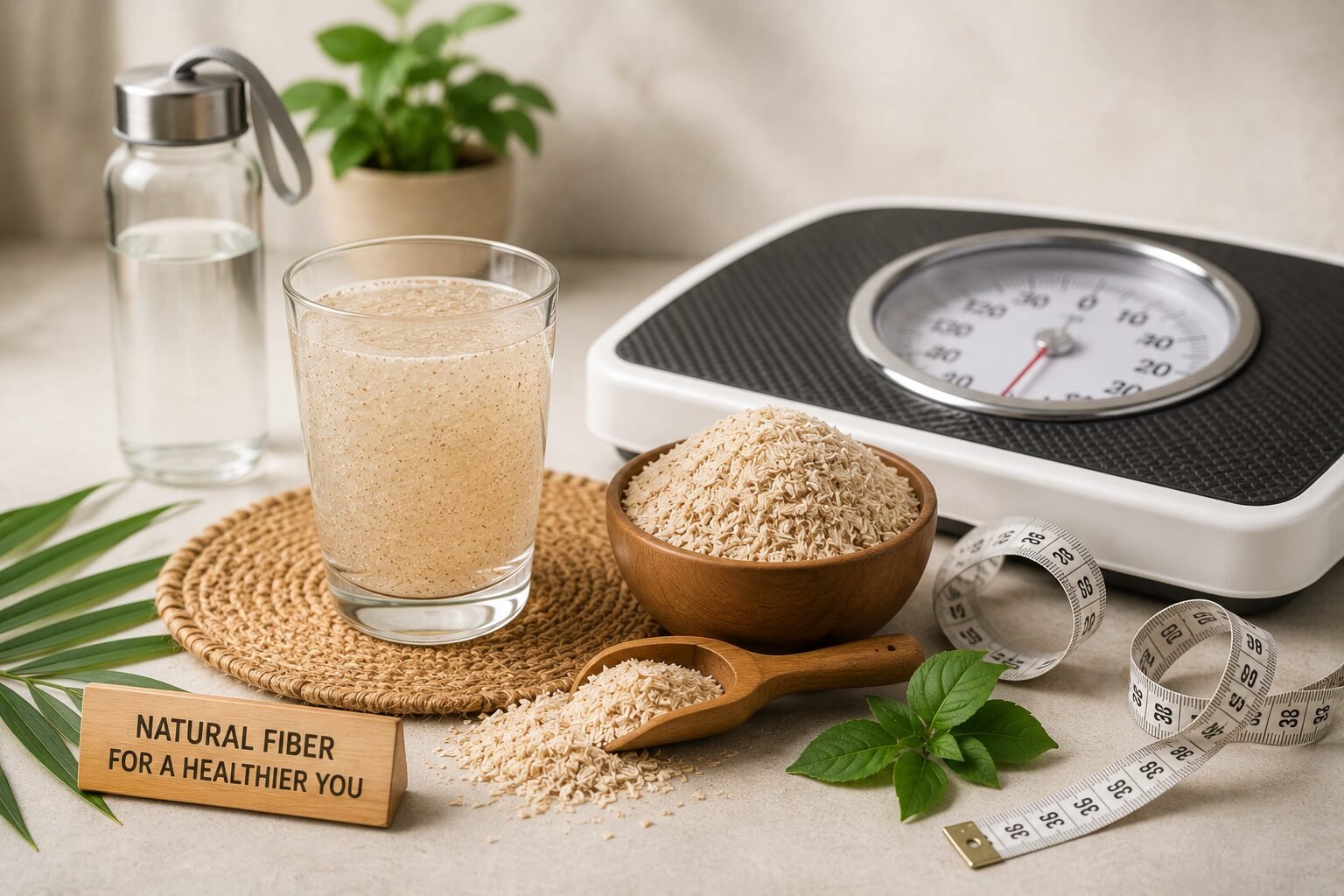
Psyllium Husk for Weight Loss: What Does Research Show?
It is easy to find an encouraging study headline. A more useful approach is to look at reviews that combine several trials, then check whether their conclusions agree.
- A 2020 review of 22 trials found no statistically significant overall reduction in body weight, body mass index, or waist circumference. Read the 2020 systematic review.
- A 2023 review of six selected trials involving 354 participants reported a modest average weight reduction. Its narrower selection of studies means it should not be treated as a promise for every person or product. Read the 2023 meta-analysis.
- A 2025 review of 27 trials did not show a consistent weight-management benefit. Its pooled body-weight result increased, while several other body-size measures did not change significantly. This does not establish that every user gains weight either. Read the 2025 systematic review.
The studies differ in participants, products, duration, and selection criteria. Taken together, they do not justify calling psyllium a reliable slimming treatment. They also do not establish one best dose or time of day for weight loss.
Constipation relief is a different outcome
Psyllium absorbs liquid in the intestine and helps form a bulkier stool that is easier to pass. That explains its use as a laxative; it does not mean it removes body fat. Less bloating or a different scale reading after a bowel movement should not be confused with lasting fat loss. MedlinePlus explains its medical uses.
When considering psyllium husk for weight loss, ask what problem you actually want to solve. Constipation, difficulty getting enough dietary fibre, and long-term weight management are different issues. A pharmacist or clinician can help you choose an appropriate approach rather than treating them as the same thing.
Check the Label Before Choosing a Product
A teaspoon is not a universal dose. Loose husk, finely ground powder, flavoured granules, sachets, and capsules can have different serving sizes and preparation instructions. A dose printed on another brand's website may not match the container you own.
- Read the active ingredients. Check whether it contains psyllium alone or additional ingredients. Do not assume a blend marketed for slimming is equivalent to a plain fibre product.
- Find the measured serving. Use the supplied measure or the exact method specified by the manufacturer. Do not copy the spoon or glass in an article photograph.
- Read the required liquid amount. Check both the mixing instructions and any advice about additional fluids.
- Check warnings and medicine spacing. Have your medication list available, including supplements and non-prescription medicines.
- Compare the whole label. If added sugar, flavourings, or allergens matter to you, check the ingredient and nutrition information rather than relying on the front-of-pack claim.
For example, the Konsyl powder label calls for at least a full 8-ounce glass of liquid. NHS directions for a particular ispaghula sachet, Fybogel, specify a different preparation. These examples illustrate why directions are product-specific, not a reason to substitute one brand's instructions for another.
Preparation, Medicines, and Safety
Water is part of the dose
For the powder and granules described by MedlinePlus, mix the dose with 8 ounces, approximately 240 ml, of liquid immediately before use. Follow the instructions for your actual product. If you have a prescribed fluid restriction, ask your healthcare team before starting rather than increasing fluid intake yourself.
Measure first, mix as directed, and drink promptly. Do not prepare a thick drink and leave it for later. Do not replace the required liquid with a spoonful of yoghurt or casually sprinkle dry powder onto food unless your product's directions specifically allow that preparation. Capsules also have their own fluid instructions.
There is no proven best weight-loss schedule
Claims that everyone should take psyllium 20 minutes before meals, on an empty stomach, or at bedtime are too broad. Follow the label or your clinician's instructions. The NHS Fybogel guide, for example, advises taking that product after a meal or snack and not immediately before sleep. That is medicine guidance, not evidence of a special fat-burning window.
Ask about medicine spacing
Psyllium can affect how some medicines are taken or absorbed. Do not assume that one short gap works for every medicine. MedlinePlus specifically advises not taking digoxin, salicylates such as aspirin, or nitrofurantoin within three hours of psyllium. Tell a pharmacist exactly which product and medicines you use before choosing a schedule.
When to get advice before starting
Discuss swallowing problems, suspected intestinal blockage, rectal bleeding, significant digestive symptoms, pregnancy or breastfeeding, existing health conditions, and all medicines with a clinician or pharmacist. The NHS suitability checklist explains important cautions for ispaghula products. Avoid breathing in the powder when mixing it because an allergic reaction is possible.
Side effects and warning signs
Gas and abdominal discomfort can occur. Do not respond to discomfort by taking extra doses. Severe or worsening symptoms need assessment, and the emergency symptoms listed above should not be managed by simply drinking another glass and waiting.
For constipation, follow the product's instructions on when to seek help. MedlinePlus advises against using psyllium for more than a week without medical direction; NHS Fybogel guidance advises speaking to a doctor if constipation has not improved or worsens after three days. Clinician-supervised longer-term fibre use is a separate situation.
Build a Food-First Routine
A supplement is optional, not the foundation of every meal. You can start by organising ordinary foods and making meals easier to repeat. These examples contain no added psyllium and are meal ideas, not a prescribed calorie plan.
A simple breakfast
Prepare oats according to the packet instructions. Add plain yoghurt or a suitable alternative and a portion of fruit. Choose amounts that fit your appetite, needs, and dietary restrictions. For more combinations, see our high-protein breakfast ideas.
A practical lunch or dinner
Combine cooked lentils or beans with vegetables and rice, another grain, or bread. Season with herbs, lemon, or spices you enjoy. If using canned beans, drain and rinse them. Make enough for the number of people eating rather than assuming a fixed serving suits everyone.
A drink you enjoy without slimming promises
Plain water is enough. If you prefer a little flavour, our infused water recipes offer fruit and herb combinations. Neither plain nor infused water detoxes your body or replaces the liquid instructions on a fibre product.

A useful checklist for your pharmacist
- What is my reason for using this product?
- Is it suitable with my health conditions and medicines?
- What amount and liquid volume does this exact product require?
- Where can it fit without conflicting with my medicine schedule?
- Which symptoms mean I should stop or seek medical care?
- When should I review whether it is helping?
Take the container or a clear photograph of its label to the discussion. That makes the advice more specific than asking about an unnamed scoop of fibre.
Frequently Asked Questions
Does psyllium husk burn belly fat?
The research discussed here does not establish targeted belly-fat burning. Advertising that promises a smaller waist from a particular drink or time of day goes beyond these findings.
Should I use psyllium instead of breakfast?
No. A fibre product is not a complete meal. It does not replace the variety of nutrients provided by food, and skipping meals is not a requirement for using it.
How much should I take for weight loss?
This article does not recommend a weight-loss dose. Study doses are not personal prescriptions. Use the directions for a suitable product and get professional advice where needed.
Can I take it every day?
That depends on the product, reason for use, and your medical situation. Do not turn a short course for constipation into indefinite self-treatment without checking the label and discussing persistent symptoms.
Is psyllium necessary for a weight-management plan?
No. The mixed evidence means it should not be presented as essential. A realistic plan can focus on meals, activity you can sustain, sleep, and appropriate medical support without adding a supplement.
Sources and Further Reading
The linked sources allow you to check the medical directions and research rather than relying on supplement marketing. Product labels are examples, not endorsements.