Nutrition facts · Practical portions · Everyday food
Nutritional Value of Chia Seeds: Facts and Food Uses
Understanding the nutritional value of chia seeds starts with the amount you actually eat. These small seeds contribute fibre, fat and some protein, but they are not a miracle food or a replacement for a varied diet.
This guide explains a measured serving, omega-3 differences, preparation precautions and a simple pudding idea.
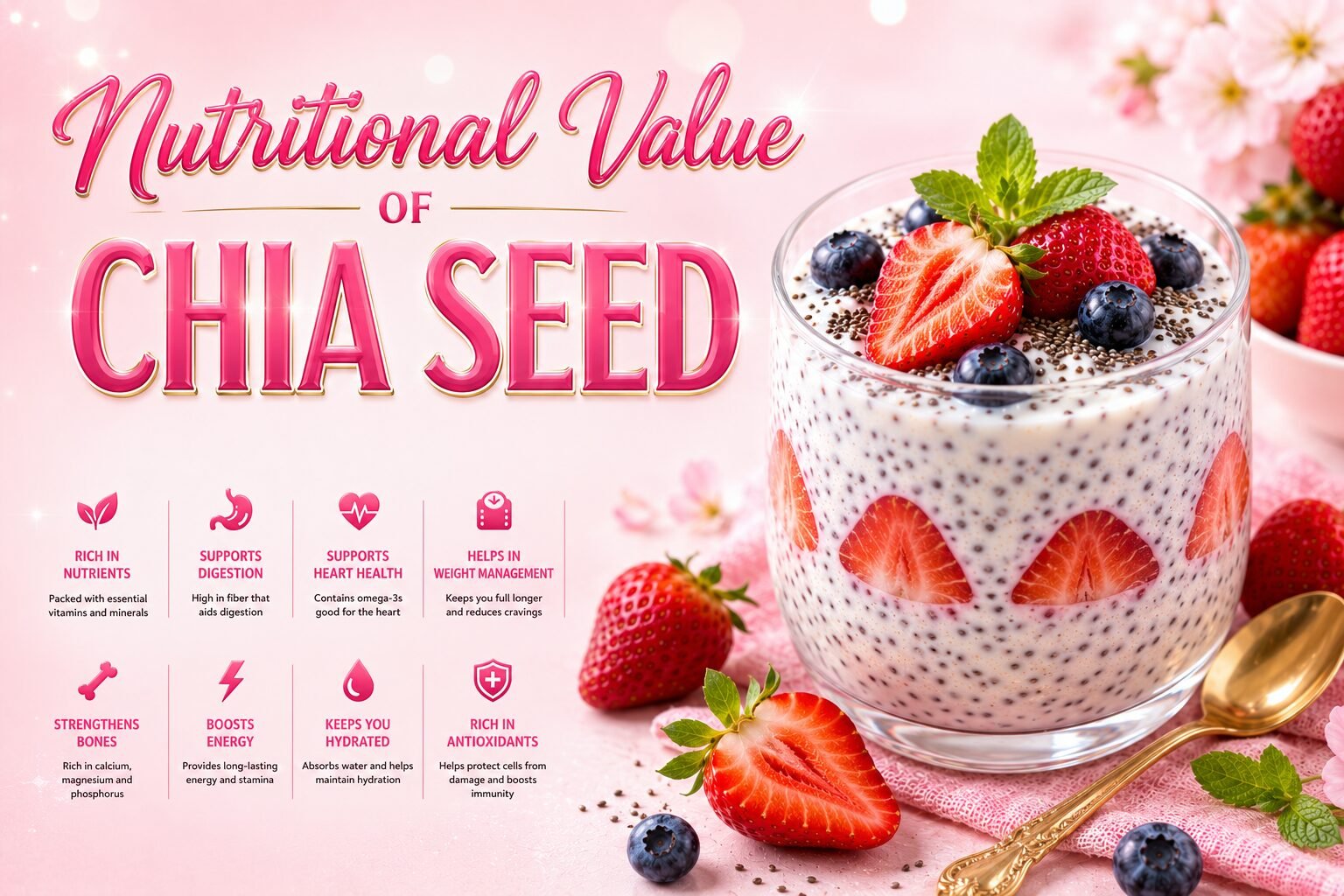
Nutritional value of chia seeds in a 28 g serving
Harvard’s Nutrition Source gives the following approximate figures for 28 g, described as about two tablespoons. Spoon measurements vary, so grams are the clearer reference.
| Nutrient | Amount |
|---|---|
| Energy | 140 calories |
| Protein | 4 g |
| Fibre | 11 g |
| Unsaturated fat | 7 g |
Source: Harvard Nutrition Source: Chia seeds . Unsaturated fat is only one component of total fat. This table is not a complete nutrition label.
Do not combine a calorie figure from one database with mineral values from another and present the result as an exact label. Use one consistent source and a clearly defined serving.
A 100 g comparison can help compare foods, but it should not be interpreted as a suggested daily portion. Likewise, a heaped tablespoon is not a standard weighed serving.
Chia omega-3 is mainly ALA
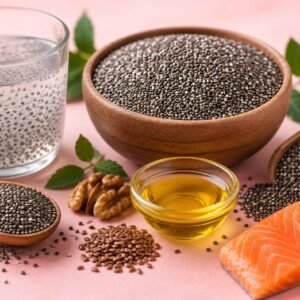
Chia supplies alpha-linolenic acid, or ALA, a plant omega-3. Fish and seafood provide EPA and DHA. The body converts only small amounts of ALA into EPA and DHA.
This means chia should not be described as a direct equivalent to fish or a prescribed omega-3 product. Its place in your diet depends on your wider food choices.
How to interpret nutrition claims
A food containing protein does not automatically provide enough to serve as your main protein source. Look at the amount in the portion you use, rather than judging from marketing terms.
Similarly, adding chia to a sweet dessert does not erase the contribution of the other ingredients. A small addition may change its nutrient content, but the whole recipe still matters.
Avoid promises that chia “burns fat,” cures diabetes or replaces treatment for high cholesterol. Nutrient content and a proven clinical treatment effect are different questions.
If you track carbohydrates for diabetes or follow a prescribed diet, use your usual nutrition resources and care-team advice. Do not assume fibre-rich ingredients make portion size irrelevant.
Preparation and swallowing precautions
Chia absorbs liquid and forms a gel. Do not swallow a spoonful of dry seeds and then try to wash it down with water. Serve it hydrated or incorporated into moist food.
If you have swallowing difficulties, ask your clinician whether chia is appropriate. Seek urgent medical help if food becomes stuck or you have trouble swallowing or breathing.
Check your tolerance rather than beginning with a large quantity. If a new food causes ongoing discomfort or a suspected allergy, stop it and seek appropriate advice.
Choose food-grade seeds. Follow the packet’s storage directions, and keep prepared dairy-based dishes refrigerated.
A simple chia pudding idea
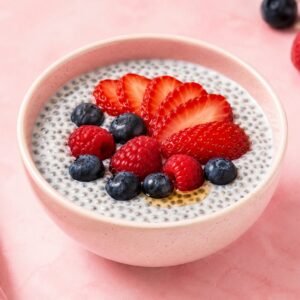
This is an adaptation of a common chia-pudding method, not a personally kitchen-tested recipe. Consistency and yield depend on the ingredients and your preferred texture.
Ingredients
- 2 tablespoons chia seeds
- Half a cup pasteurised milk or a suitable unsweetened plant drink
- A small amount of washed berries for serving
- Optional cinnamon or vanilla flavouring
Method
- Mix the chia and liquid thoroughly in a clean covered container.
- Stir again after several minutes to break up clumps.
- Refrigerate until the seeds are hydrated and the mixture has thickened.
- Adjust with a little more liquid if the texture is too thick.
- Divide into portions that suit your needs and add berries before serving.
The ingredient amounts describe the mixture, not a required single serving. For a repeatable recipe, record the seed weight and the finished yield.
Check allergens in milk, plant drinks and toppings. Different plant drinks are not equivalent in protein or fortification. Follow ingredient storage instructions rather than assuming every pudding has the same shelf life.
Other ways to use chia seeds
- Stir a small amount into moist oatmeal and let it hydrate.
- Mix hydrated chia into yogurt if you enjoy the texture.
- Use it in a reliable baking recipe that specifies the quantity.
- Add a little prepared chia gel to a sauce or other suitable food.
Chia is optional. You can build a varied eating pattern without it, and you do not need to add it to every meal.
Explore our protein-containing breakfast ideas , seven practical breakfast options and snack and portion guide .
Nutritional value of chia seeds: common questions
How much should I eat every day?
There is no universal daily requirement to eat chia. Consider your tolerance, the portion and the rest of your diet. Follow individual advice if you have medical dietary needs.
Will chia seeds make me lose weight?
Chia is not a weight-loss treatment. Adding it to your existing food also adds energy; it does not guarantee a change in weight.
Does soaking change the amount of seed calories?
Added water increases the mixture’s volume without adding calories. Milk, yogurt and toppings contribute their own nutrients, so count them separately.
Can I use the picture as a nutrition label?
No. Use the label on your actual product and measured ingredients for a recipe calculation.
Sources and editorial transparency
These sources have not reviewed or endorsed this article. I own Fast Slim Journey and check health information using medical websites. No professional nutrition qualifications or personal clinical review are claimed.
Read about the blog and our disclaimer.