Table of Contents
ToggleMakeup Tips for Acne Prone Skin, How to Wear Makeup Without Causing Breakouts

Makeup Tips for Acne Prone Skin
If you have acne-prone skin, you’ve probably asked yourself at least once, “Is makeup making my skin worse?”
It’s a common concern. Many people avoid wearing makeup because they’re worried it will clog pores or lead to more breakouts. Others wear makeup every day but struggle to find products that don’t feel heavy or greasy.
The truth is that makeup itself isn’t usually the problem. The way you prepare your skin, the products you choose, and how you remove your makeup at the end of the day all play a much bigger role.
With the right routine, you can enjoy makeup while helping your skin stay healthy and comfortable.
This guide shares practical Makeup Tips for Acne Prone Skin that are easy to follow, whether you’re a beginner or someone who wears makeup every day.
What Is Acne Prone Skin?
Acne-prone skin is skin that develops pimples, blackheads, whiteheads, or clogged pores more easily than average.
Several factors can contribute to acne, including:
- Hormonal changes
- Excess oil production
- Genetics
- Stress
- Certain skincare or makeup products
- Poor makeup hygiene
Having acne-prone skin doesn’t mean you should stop wearing makeup. It simply means your products and routine need to support your skin instead of working against it.
Why Makeup Can Trigger Breakouts
Many people believe makeup always causes acne, but that’s not entirely true.
Breakouts often happen because of habits such as:
- Sleeping with makeup on
- Using dirty makeup brushes
- Applying makeup over unclean skin
- Choosing products that clog pores
- Using expired cosmetics
Modern beauty brands now offer lightweight, non-comedogenic formulas designed specifically for oily and acne-prone skin.
Why Your Skincare Routine Matters Before Makeup

Great makeup starts with healthy skin.
Even the most expensive foundation won’t look its best if your skin is dehydrated, irritated, or covered with excess oil.
Preparing your skin properly helps makeup:
- Blend more smoothly
- Stay in place longer
- Look more natural
- Feel lighter throughout the day
Step 1: Cleanse Your Skin
Always begin with clean skin.
A gentle cleanser removes:
- Oil
- Dirt
- Sweat
- Old skincare products
- Environmental pollution
Avoid harsh cleansers that leave your skin feeling tight because they may encourage your skin to produce even more oil.
Step 2: Apply a Lightweight Moisturizer
One of the biggest skincare myths is that oily or acne-prone skin doesn’t need moisturizer.
In reality, dehydrated skin often produces extra oil to compensate.
Choose a moisturizer that is:
- Oil-free
- Lightweight
- Non-comedogenic
- Fragrance-free if your skin is sensitive
Step 3: Never Skip Sunscreen
Daily sunscreen is essential.
UV exposure may contribute to:
- Dark acne marks
- Uneven skin tone
- Premature aging
- Sun damage
Choose a sunscreen that offers:
- SPF 30 or higher
- Broad-spectrum protection
- Lightweight texture
- Matte or natural finish
Allow it to absorb for a few minutes before applying makeup.
Best Glass Skin Home Remedies – Link when discussing healthy, glowing skin.
Step 4: Apply Primer (Optional)
Primer isn’t required, but it can help if your skin becomes oily during the day.
A good primer can:
- Smooth the appearance of pores
- Reduce shine
- Help makeup last longer
Choose an oil-free primer made for oily or acne-prone skin.
Makeup Tips for Acne Prone Skin

1. Choose Non-Comedogenic Makeup
The first rule is simple.
Look for products labeled non-comedogenic.
These products are formulated to reduce the likelihood of clogged pores.
Examples include:
- Foundation
- Concealer
- Primer
- Moisturizer
- Sunscreen
2. Use Lightweight Foundation
Heavy foundation may look cakey and settle into textured areas.
Instead, choose:
- Water-based foundation
- Lightweight liquid foundation
- Oil-free formulas
Build coverage gradually instead of applying a thick layer all at once.
3. Apply Makeup in Thin Layers
Less is often more.
Applying thin layers creates a more natural appearance while reducing the chance of clogged pores.
4. Use Clean Makeup Brushes
Your makeup brushes collect:
- Oil
- Dead skin cells
- Dust
- Makeup residue
- Bacteria
Clean them at least once a week using a gentle brush cleanser.
5. Replace Old Makeup
Using expired makeup increases the risk of irritation and bacterial contamination.
As a general rule:
| Product | Recommended Replacement |
|---|---|
| Mascara | Every 3 months |
| Liquid Foundation | 6–12 months |
| Beauty Sponge | Every 2–3 months |
| Powder Products | 12–24 months |
6. Don't Share Makeup
Sharing makeup may spread bacteria.
Avoid sharing:
- Mascara
- Lipstick
- Foundation
- Concealer
- Makeup brushes
7. Keep Your Hands Away From Your Face
Touching your face transfers bacteria and oil.
If your skin becomes oily, use blotting papers instead of rubbing your face.
8. Use Concealer Only Where Needed
Instead of covering your entire face with heavy concealer, apply a small amount directly over blemishes.
This creates a fresher and more natural look.
9. Set Makeup Lightly
A translucent setting powder can help control shine.
Focus on:
- Forehead
- Nose
- Chin
Avoid using too much powder because it may make makeup look dry.
10. Remove Makeup Every Night
This is probably the most important habit for healthy skin.
Sleeping with makeup on allows oil, dirt, and product residue to remain on your skin for hours.
Always remove makeup before going to bed, even if you’re tired.
11. Double Cleanse After Wearing Makeup
If you wear foundation, concealer, sunscreen, and long-lasting makeup every day, a single cleanse may not remove everything completely.
Double cleansing is a simple method that helps remove makeup, sunscreen, excess oil, and impurities without aggressively scrubbing your skin.
A simple double-cleansing routine includes:
- Use a gentle cleansing balm or makeup remover.
- Wash your face with a mild facial cleanser.
This routine leaves your skin feeling fresh and prepares it for your nighttime skincare products.
12. Give Your Skin Makeup-Free Days
Your skin deserves a break from makeup occasionally.
Taking one or two makeup-free days each week allows your skin to recover naturally while you focus on hydration, cleansing, and sunscreen.
Many dermatologists encourage simple skincare routines instead of wearing heavy makeup every day.
13. Always Patch Test New Products
Never apply a brand-new makeup product directly to your entire face.
Instead:
- Apply a small amount behind your ear or along your jawline.
- Wait 24–48 hours.
- Check for redness, itching, or irritation.
Patch testing can help you avoid unnecessary breakouts or allergic reactions.
14. Keep Your Makeup Tools Clean
Your brushes and beauty sponges can collect:
- Oil
- Dead skin cells
- Dust
- Bacteria
- Product buildup
Cleaning your tools regularly is one of the easiest Makeup Tips for Acne Prone Skin because it reduces the chance of transferring bacteria back onto your face.
Brush Cleaning Schedule
| Makeup Tool | Recommended Cleaning Frequency |
|---|---|
| Foundation Brush | Once a week |
| Powder Brush | Every 7–10 days |
| Eyeshadow Brushes | Weekly |
| Beauty Sponge | Every 2–3 uses |
| Eyelash Curler | Weekly |
15. Follow a Simple Skincare Routine Every Day
Healthy skin creates the perfect base for beautiful makeup.
Instead of buying dozens of products, focus on consistency.
Morning Routine
- Gentle Cleanser
- Lightweight Moisturizer
- Sunscreen SPF 30+
- Primer (Optional)
- Makeup
Evening Routine
- Makeup Remover
- Gentle Cleanser
- Acne Treatment (if recommended by your dermatologist)
- Moisturizer
A simple routine is often more effective than using too many products at once.
Best Ingredients to Look For
Choosing skin-friendly makeup products can make a noticeable difference.
| Ingredient | Why It Is Popular |
| Niacinamide | Helps support the skin barrier and improve the appearance of uneven skin tone. |
| Hyaluronic Acid | Provides lightweight hydration. |
| Ceramides | Help maintain the skin’s natural moisture barrier. |
| Zinc | Commonly included in products designed for oily skin. |
| Green Tea Extract | Often used for its soothing properties. |
| Glycerin | Helps attract moisture to the skin. |
Ingredients You May Want to Avoid
Every person’s skin reacts differently, but many people with acne-prone skin prefer products that avoid ingredients they know irritate their skin. Choosing the right ingredients is one of the most important Makeup Tips for Acne Prone Skin.
Examples include:
Heavy pore-clogging oils
Strong artificial fragrance
Excessively drying alcohol-based formulas
Products that have previously caused irritation
Reading ingredient labels before purchasing new makeup can save both money and frustration. Following these Makeup Tips for Acne Prone Skin can also help you make more informed choices when selecting beauty products.
Common Makeup Mistakes That Can Make Acne Worse
Many breakouts are caused by habits rather than makeup itself.
Avoid these common mistakes:
Sleeping With Makeup
Leaving makeup on overnight allows oil and product buildup to remain on your skin for hours.
Applying Makeup on Dirty Skin
Always begin with freshly cleansed skin.
Using Too Much Foundation
Heavy makeup often draws attention to texture instead of hiding it.
Using Dirty Makeup Brushes
Unwashed brushes can transfer bacteria back onto your face.
Skipping Sunscreen
Daily sunscreen helps protect your skin from harmful UV rays and may reduce the appearance of post-acne marks.
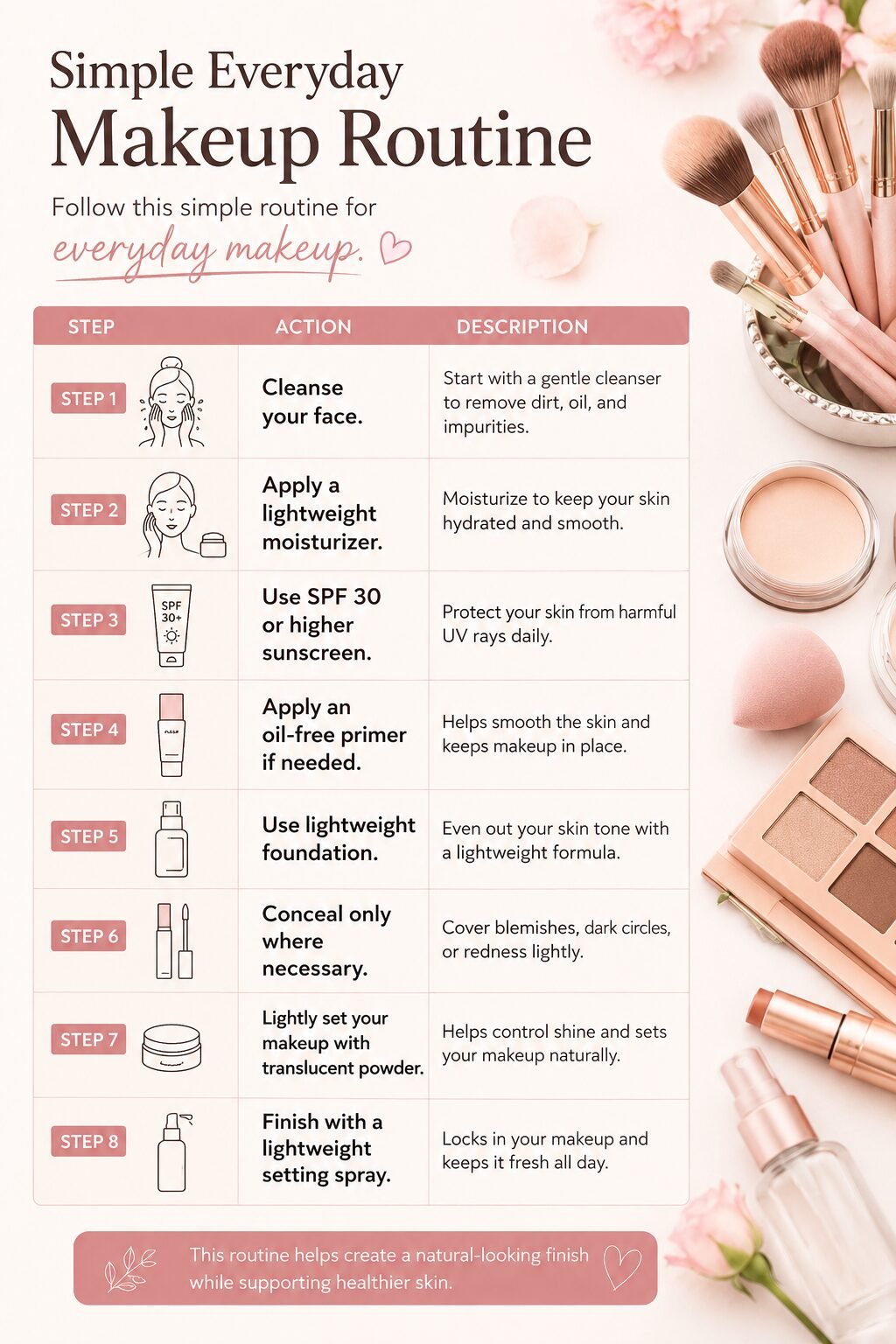
Daily Makeup Routine for Acne Prone Skin

Dermatologist-Inspired Advice
If you continue experiencing frequent acne despite following a good skincare routine, consider speaking with a qualified dermatologist.
Professional advice can help identify underlying causes such as hormonal acne, allergic reactions, or unsuitable skincare products.
These Makeup Tips for Acne Prone Skin are most effective when combined with professional skincare advice whenever needed.
Remember that makeup should enhance your confidence—not hide your skin.
Healthy skin is always the best beauty investment, and following these Makeup Tips for Acne Prone Skin can help you maintain healthier-looking skin while enjoying makeup with confidence.
Frequently Asked Questions (FAQs)
1. What are the best makeup tips for acne prone skin?
The best makeup tips for acne prone skin include using non-comedogenic products, choosing lightweight foundation, applying makeup in thin layers, cleaning makeup brushes regularly, wearing sunscreen every day, and removing makeup completely before going to bed.
2. Can makeup cause acne breakouts?
Makeup does not automatically cause acne. Breakouts are more likely when products clog pores, makeup is not removed properly, or dirty brushes and beauty sponges transfer bacteria to the skin.
3. What foundation is best for acne prone skin?
A lightweight, oil-free, non-comedogenic foundation is usually the best choice. These formulas provide buildable coverage while reducing the chance of clogged pores.
4. Should I use primer if I have acne prone skin?
Yes, if your skin becomes oily during the day. A lightweight, non-comedogenic primer can help smooth the skin, reduce shine, and improve makeup wear without feeling heavy.
5. Is mineral makeup better for acne prone skin?
Mineral makeup works well for many people because it is often lightweight and less likely to clog pores. However, choosing products that suit your individual skin type is more important than choosing a specific formula.
Key Takeaways
- Always start with clean, moisturized skin.
- Wear a broad-spectrum SPF 30 or higher every day.
- Choose non-comedogenic and oil-free makeup products.
- Apply makeup in thin, lightweight layers.
- Clean makeup brushes and beauty sponges regularly.
- Never sleep with makeup on.
- Follow a consistent skincare routine.
- Replace expired makeup products.
- Healthy skin creates the best makeup finish.
- Consistency is more important than using many expensive products.
Expert Conclusion
Having acne-prone skin doesn’t mean you have to stop wearing makeup. The key is choosing products that work with your skin rather than against it. These Makeup Tips for Acne Prone Skin are designed to help you make smarter choices for healthier, clearer-looking skin.
By following these Makeup Tips for Acne Prone Skin, you can create a fresh, natural look while helping reduce the risk of clogged pores and unnecessary breakouts. A gentle skincare routine, clean makeup tools, lightweight products, and daily sun protection can make a noticeable difference over time.
Remember that healthy skin isn’t about perfection. Small, consistent habits often produce the best long-term results. Instead of trying to cover every blemish, focus on supporting your skin’s natural health. When your skin feels healthy, your makeup will naturally look smoother, lighter, and more radiant. These Makeup Tips for Acne Prone Skin can help you build a beauty routine that supports both healthy skin and long-lasting makeup.
These organizations provide evidence-based information about acne, skincare, and sun protection.