
Protection first · Comfortable texture · Clear labels
Best Sunscreen for Oily Skin: How to Choose and Use It
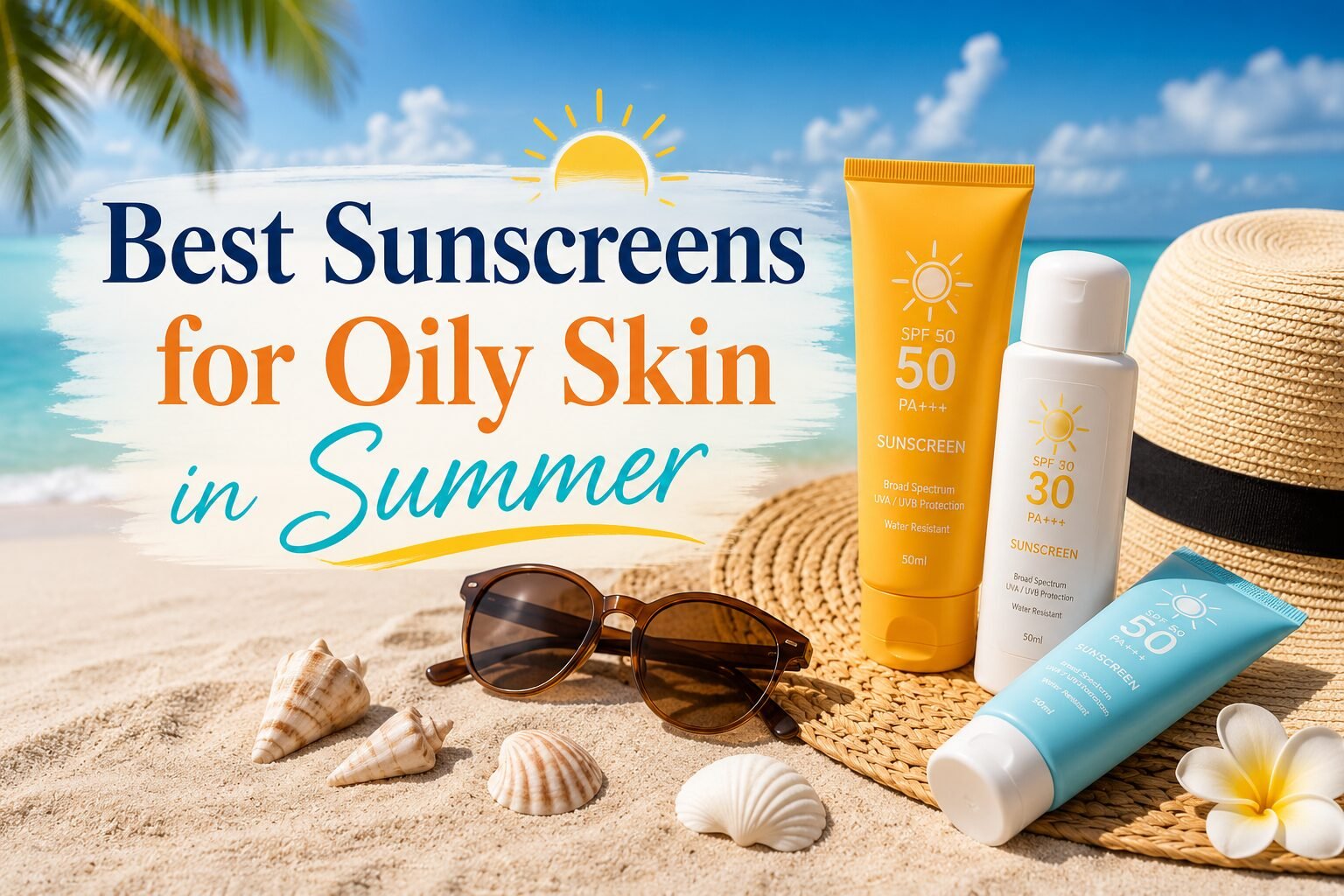
Choosing the best sunscreen for oily skin means finding suitable protection in a formula you can use consistently. A matte finish is a preference—not proof of better protection.
This guide explains label essentials, texture choices, application and what to do when a product causes problems. It is a selection guide, not a personally tested product ranking.
Article contents
Start with protection, then consider texture
The American Academy of Dermatology recommends broad-spectrum, water-resistant sunscreen with SPF 30 or higher. Oily skin still needs protection.
The AAD specifically recommends looking for “non-comedogenic” or “won’t clog pores” when choosing for oily or acne-prone skin. No label guarantees that every person will tolerate the product.
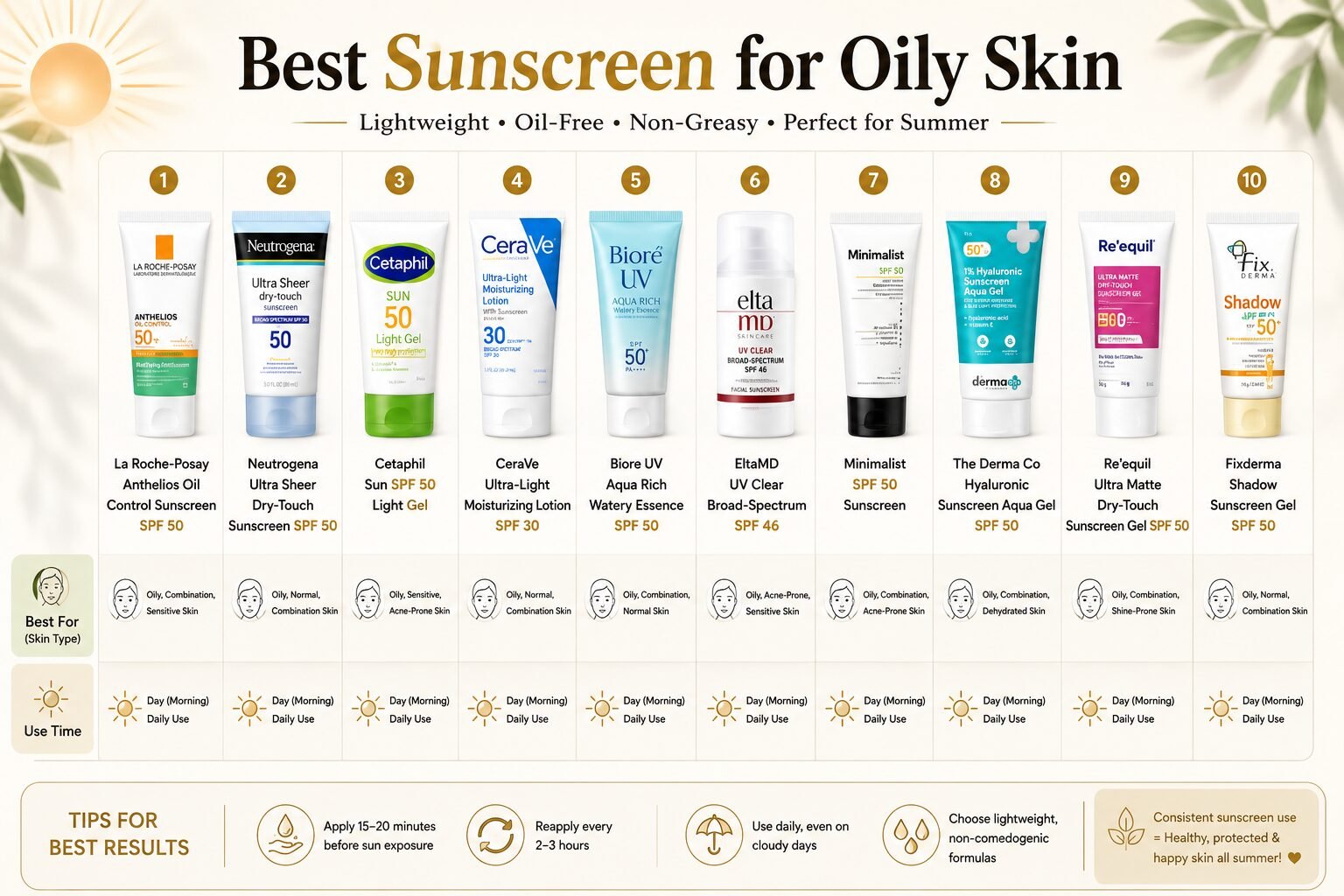
A practical comparison checklist
- Does the actual label meet the protection requirements?
- Is the product appropriate for your skin concerns?
- Can you apply an adequate amount without discomfort?
- Is its finish comfortable with your usual routine?
- Can you afford to replace it and reapply when needed?
Compare the exact local formulation. A familiar product name does not prove that versions sold in different countries have identical ingredients or instructions.
Compare the best sunscreen for oily skin by actual formulation
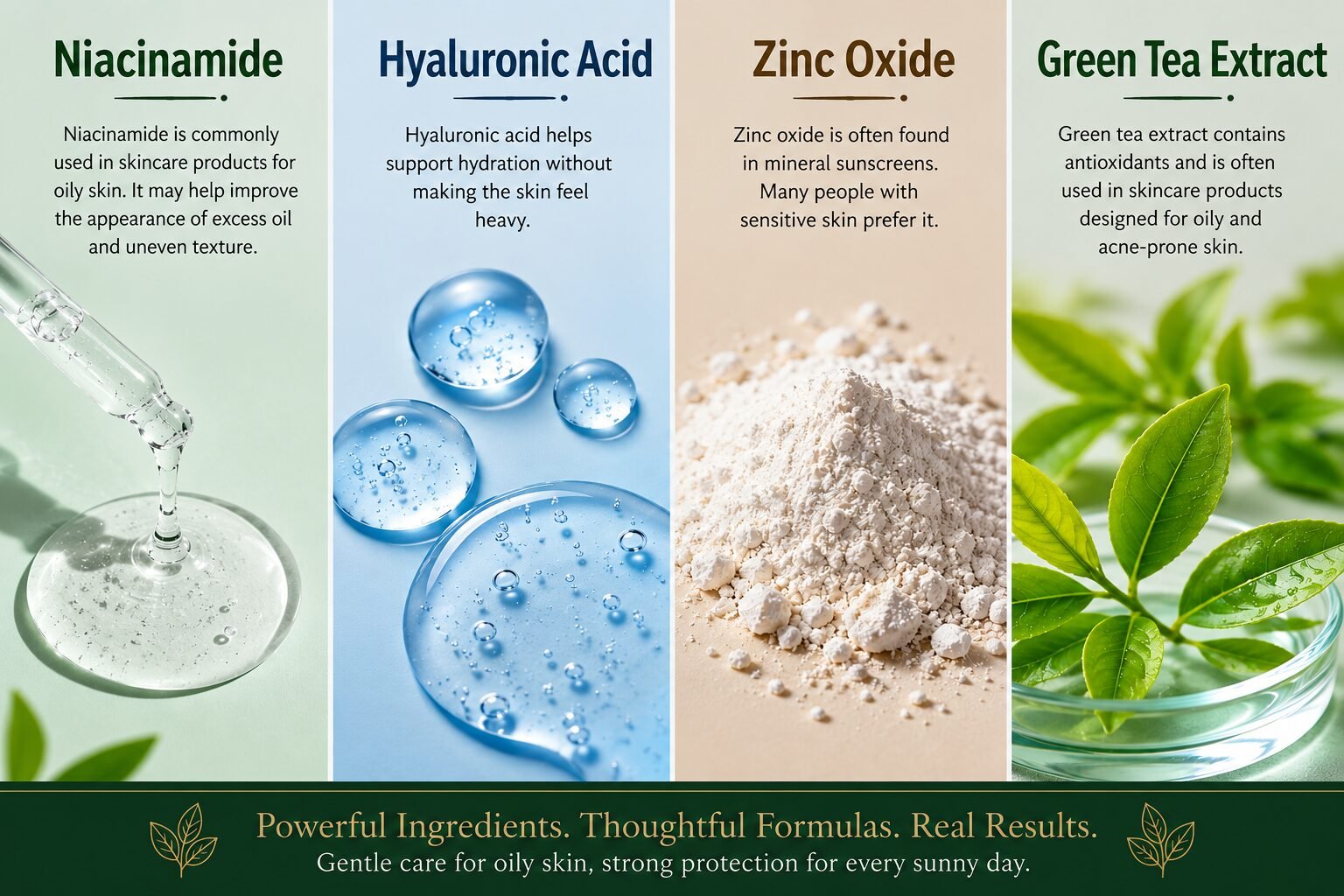
Gel or fluid
Consider these if you prefer a lighter feel. Texture alone does not establish protection or guarantee fewer breakouts.
Lotion or cream
These may also suit some people. Do not reject a product solely because another person describes its category as heavy.
Matte or tinted finish
Consider the appearance you prefer, including how a tint matches your skin. Keep protection and adequate application as the priorities.
Additional ingredients
Check for known allergens and products already in your routine. More ingredients do not automatically make a better sunscreen.
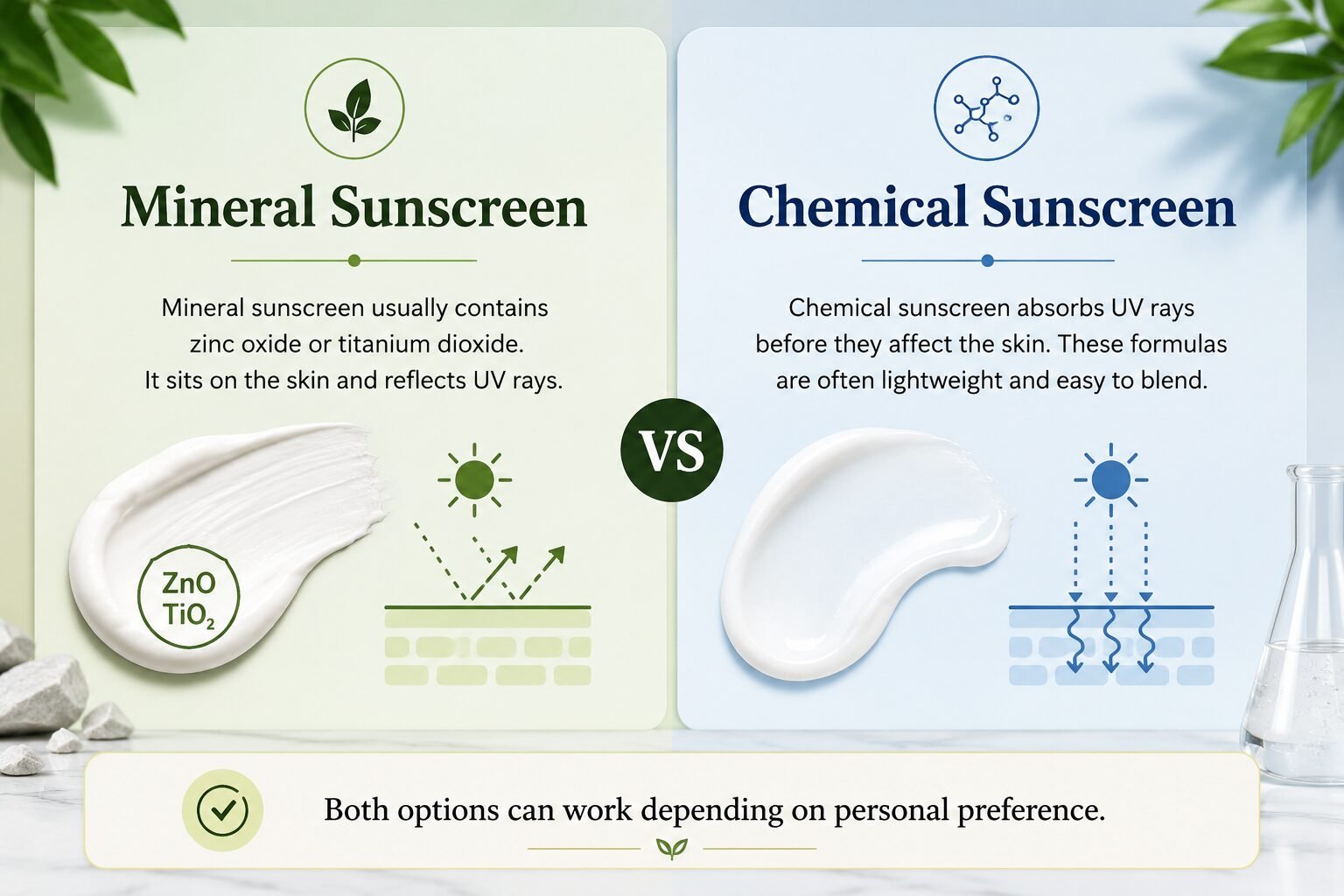
Do not assume every mineral sunscreen is heavy or every chemical sunscreen feels light. Compare the finished product, its label and your tolerance. Ask for advice if you have a known allergy.
Apply enough and plan reapplication
Apply sunscreen before going outdoors, following the product’s timing and amount instructions. Cover exposed areas, including easily missed places such as ears and neck.
Reapply about every two hours outdoors and after swimming or sweating, following the label. Reapplication is also needed after towelling off. Water-resistant does not mean waterproof.
Make an outdoor-day plan
- Pack the product you will actually use.
- Set a reminder if you tend to forget reapplication.
- Arrange shade and suitable clothing.
- Follow storage instructions rather than leaving sunscreen in excessive heat.
Higher SPF does not remove the need for proper application, reapplication or other sun protection.
Keep the rest of the routine manageable
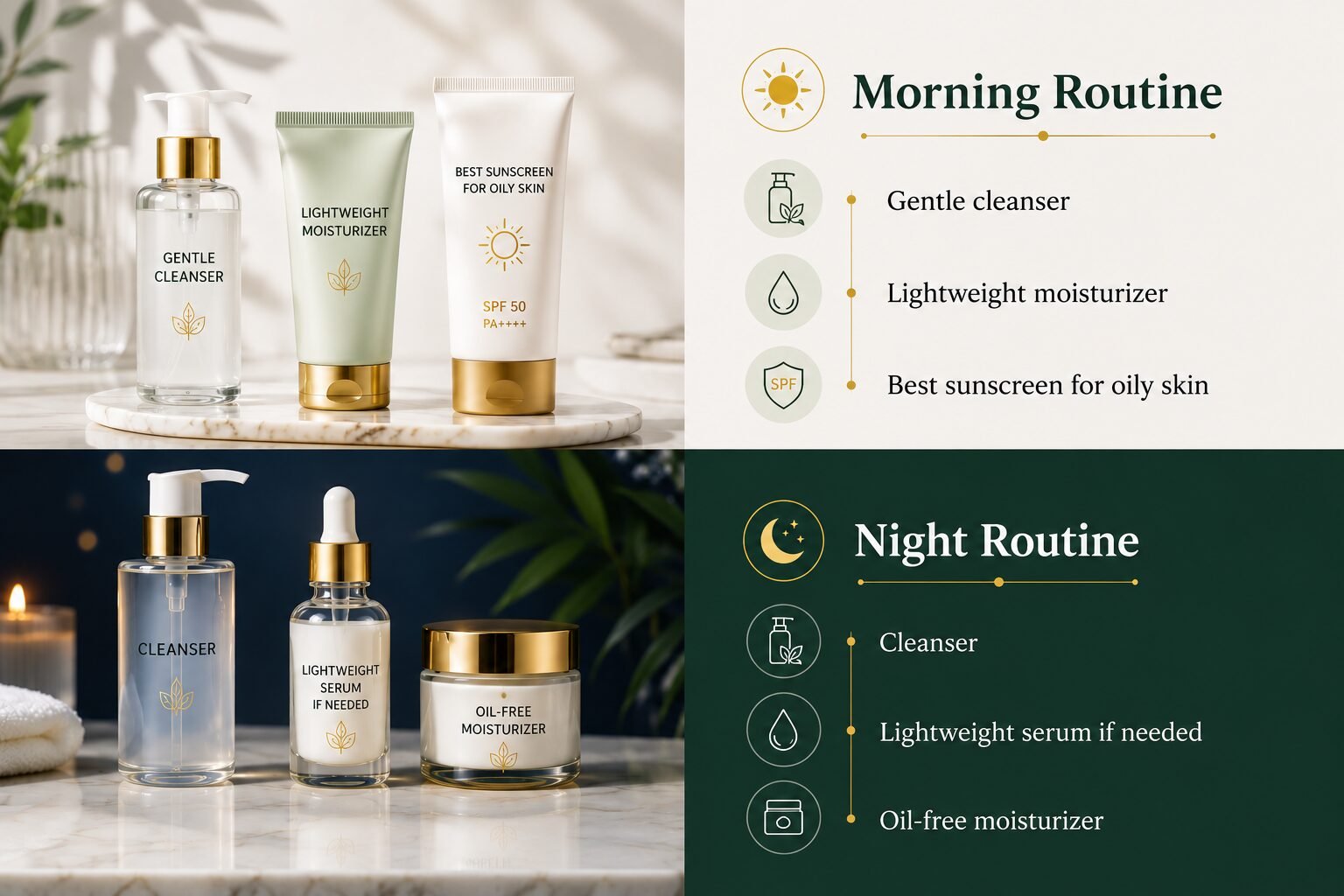
Morning
Cleanse gently as needed, use a suitable moisturiser and apply sunscreen according to its instructions. Do not dilute sunscreen by mixing it into another product.
With makeup
Choose a sunscreen that fits your usual application. Makeup containing SPF does not mean you can assume adequate sunscreen coverage. Follow the sunscreen directions and plan reapplication outdoors.
Evening
Remove makeup and sunscreen gently, then follow your usual skincare and prescribed treatment. Avoid adding several new products at once.
For related guidance, read our summer skincare routine , makeup tips for acne-prone skin and simple morning and evening skincare guide .
When a sunscreen does not suit you
Note the product name, when you began using it and what happened. Shine, pilling and irritation are different concerns and may need different adjustments.
Stop using a product that causes a reaction and seek advice if it persists or is severe. Do not assume discomfort means stronger protection.
If acne continues, ask for appropriate treatment. A sunscreen is not itself a cure for acne. See the AAD acne-care guidance .
While choosing an alternative, use shade and protective clothing rather than intentionally exposing irritated skin to strong sunlight.
Best sunscreen for oily skin: common questions
Is there one best product for everyone?
No. Protection, formulation, tolerance and practical use all matter. This article does not rank personally tested products.
Does a gel always prevent breakouts?
No texture guarantees that. Look for suitable label information and consider your individual response.
Can oily skin skip sunscreen?
Oily skin still needs sun protection. Choose an appropriate product and combine it with shade and protective clothing.
Does SPF 50 mean I can reapply less often?
No. Follow application and reapplication instructions regardless of the SPF number.
Is sunscreen only for summer?
Sun exposure can occur in other seasons and on cloudy days. Plan protection around exposure rather than temperature alone.
Sources and writing approach
These sources have not reviewed or endorsed this article or the products pictured. The comparison checklist is an editorial aid, not a clinical product test.
I own this blog and check health information using medical websites. This article has not been personally reviewed by a dermatologist. Learn more on the About page and read our Disclaimer.