Symptoms and limits · Testing · Individual care
Insulin Resistance Symptoms: Testing and Next Steps
Searching for insulin resistance symptoms can lead to long checklists of cravings, fatigue and weight changes. Those experiences do not establish a diagnosis.
Insulin resistance often has no symptoms. This guide explains its relationship with prediabetes, how clinicians assess glucose levels and what questions to ask.
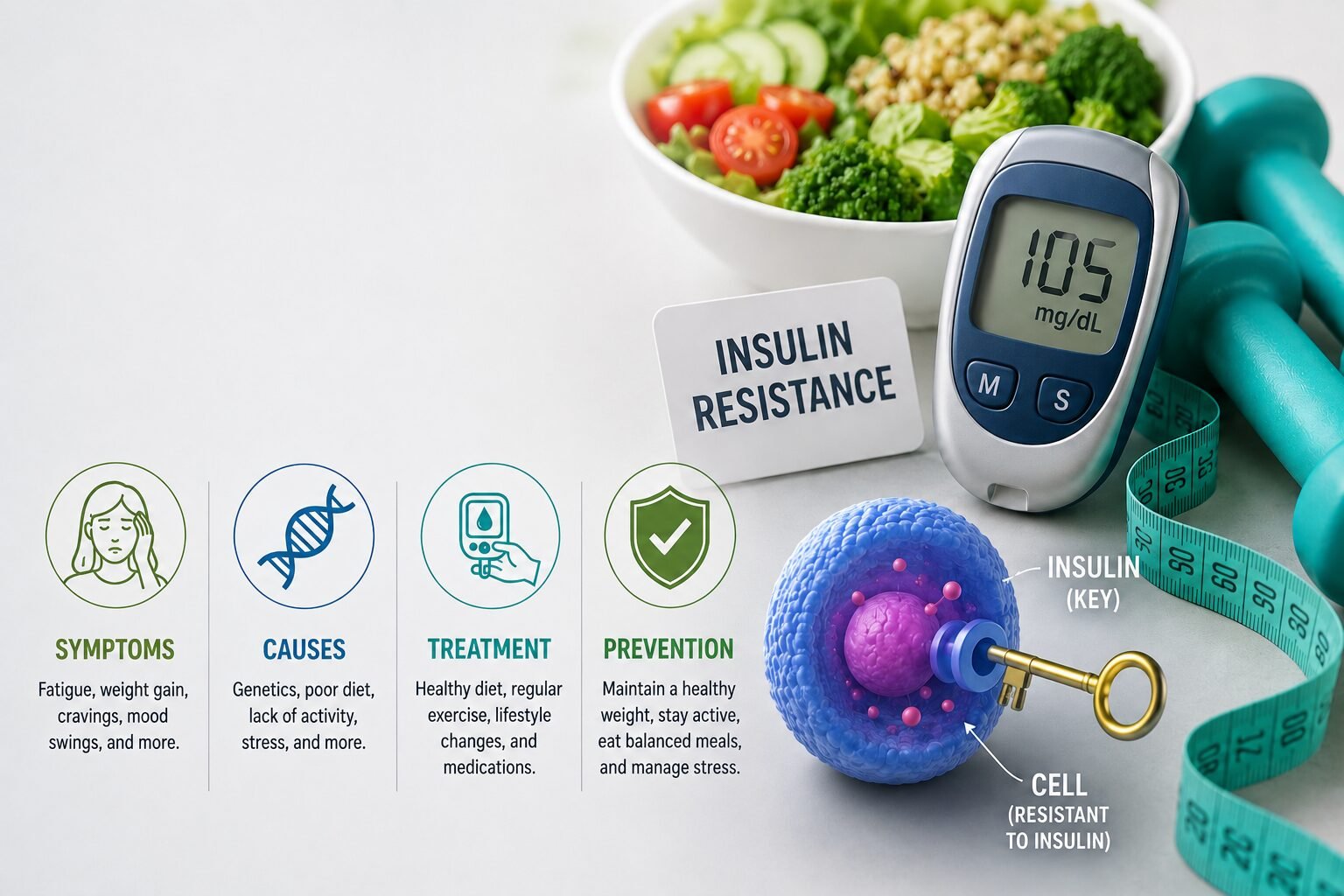
What is insulin resistance?
Insulin helps cells use glucose from the blood. With insulin resistance, cells respond less effectively, and the pancreas may produce more insulin to compensate.
Blood glucose can remain within its usual range for a time. If compensation becomes insufficient, glucose can rise. This does not mean every person will inevitably develop diabetes.
Insulin resistance, prediabetes and type 2 diabetes are related concepts, but they are not interchangeable diagnoses.
Insulin resistance symptoms: what signs can and cannot tell you
Some people have dark, velvety skin changes called acanthosis nigricans. A clinician should assess new or concerning skin changes rather than assuming their cause.
Fatigue, cravings and difficulty losing weight have many possible explanations. They should not be presented as a reliable early-warning test for insulin resistance.
Increased thirst, frequent urination, blurred vision or unexplained weight loss deserve medical assessment because they can occur with diabetes or other conditions.
When symptoms need urgent help
How testing works
Clinicians generally assess prediabetes and diabetes using glucose-based tests. Direct insulin-resistance testing is not routinely used in the same way as these diagnostic tests.
- A1C: reflects average blood glucose over roughly two to three months.
- Fasting plasma glucose: measures glucose after an instructed fasting period.
- Glucose tolerance testing: measures the response to a specified glucose drink.
Ask which test is suitable and how to prepare. A1C does not itself require fasting, although other tests ordered at the same appointment may do so.
A fasting insulin result or an online calculation should not be interpreted alone. Certain circumstances can affect test interpretation, and follow-up testing may be needed.
Risk factors are not a diagnosis
Family history, previous gestational diabetes, some metabolic conditions and PCOS can be relevant when deciding whether to screen.
Risk should not be judged from appearance alone. Ask your clinician which factors matter in your case and when testing or review is appropriate.
For terminology and care questions, see our PCOD, PCOS and PMOS guide . Having PCOS does not mean every metabolic finding should be assumed without assessment.
Food and activity within an individual plan

Build a manageable eating pattern instead of banning every carbohydrate food. Consider meal composition, portions, preferences, budget and any medical dietary advice.
A practical first step might be planning one regular meal or replacing a usual sugar-sweetened drink with an unsweetened option you enjoy.
Physical activity can improve insulin sensitivity. Choose an approach suited to your abilities and health conditions. If you take glucose-lowering medicine, ask how activity affects monitoring and low-glucose risk.
American Diabetes Association: Insulin resistance
Our practical breakfast ideas and meal-preparation guide offer food suggestions, not an individual treatment plan.
Treatment and follow-up
Treatment depends on the findings and associated conditions. Some people may be offered medication, including metformin when appropriate. There is no universal prescription for everyone who suspects insulin resistance.
Do not start supplements or stop medicine based on a blog article. Ask what benefits, side effects and monitoring apply to your plan.
Prediabetes can improve, and structured prevention programmes can reduce the risk of type 2 diabetes. Improvement should be assessed with appropriate follow-up rather than a promise of a rapid hormone reset.
CDC: Prediabetes and prevention programmes
A need for medicine is not a personal failure. Ask for support with sleep, eating concerns, physical limitations or other barriers to following the plan.
Prepare for your appointment
- Bring previous glucose or A1C results, including units and dates.
- List medicines and supplements.
- Describe persistent symptoms and when they began.
- Mention relevant family history and pregnancy-related diabetes.
- Ask when results should be reviewed or repeated.
Useful questions include: “Do I have prediabetes or diabetes?” “What does this test establish?” and “Which next step matters most for me?”
Insulin resistance symptoms: common questions
Are sugar cravings proof of insulin resistance?
No. Cravings are not a diagnostic test. Discuss persistent concerns and relevant testing.
Is insulin resistance the same as diabetes?
No. They are related but distinct. Glucose-based assessment helps identify prediabetes or diabetes.
Can I have no symptoms?
Yes. The absence of symptoms does not replace screening when it is appropriate.
Can one food reverse it?
No single food is established here as a cure. Care considers the wider eating pattern, activity, test results and other health factors.
Sources and editorial transparency
- NIDDK: Insulin resistance and prediabetes
- CDC: Diabetes testing
- ADA: Insulin resistance
- CDC: Emergency warning signs
These sources have not reviewed or endorsed this article. I own Fast Slim Journey and check health information using medical websites. No medical qualifications or professional clinical review are claimed.
Read about the blog and our disclaimer.